When to Canvass, Call, or Text: Choosing the Right Contact Method
A practical framework for choosing canvassing, phone calls, or text messages based on campaign goals, information quality, urgency, volunteer capacity, and follow-up responsibility.
Updated September 6, 2026
A campaign does not need to choose one contact method for every voter, every goal, or every week.
Canvassing, phone calls, and text messages each solve different operational problems. The right choice depends on what the campaign needs to learn or accomplish, how urgent the contact is, what information it can responsibly use, and whether the team can follow up on what it hears.
Channel choice comes before software. Activate becomes useful after a campaign can name the job and decide how it will handle replies.
This guide offers a practical way to choose. For the launch mechanics that come after the decision, see The First 30 Minutes. For conversation training, see One Honest Question.
Start with the goal, not the channel
Before assigning a turf list or writing a script, name the job the contact is supposed to do.
Common goals include
- learning what residents care about;
- introducing a candidate or campaign;
- answering a question;
- recruiting volunteers;
- confirming a voting plan;
- reminding supporters about an event;
- following up on a previous conversation; and
- reaching people who have not responded through another method.
A channel is not successful merely because a message was delivered. It is successful when it helps the campaign make a responsible next decision.
For example, a campaign that needs to understand why residents are frustrated with a city service may learn more from a short doorstep conversation than from a high-volume text. A campaign reminding confirmed supporters about an event may not need a volunteer to walk to every door.
What each method is good at
Canvassing
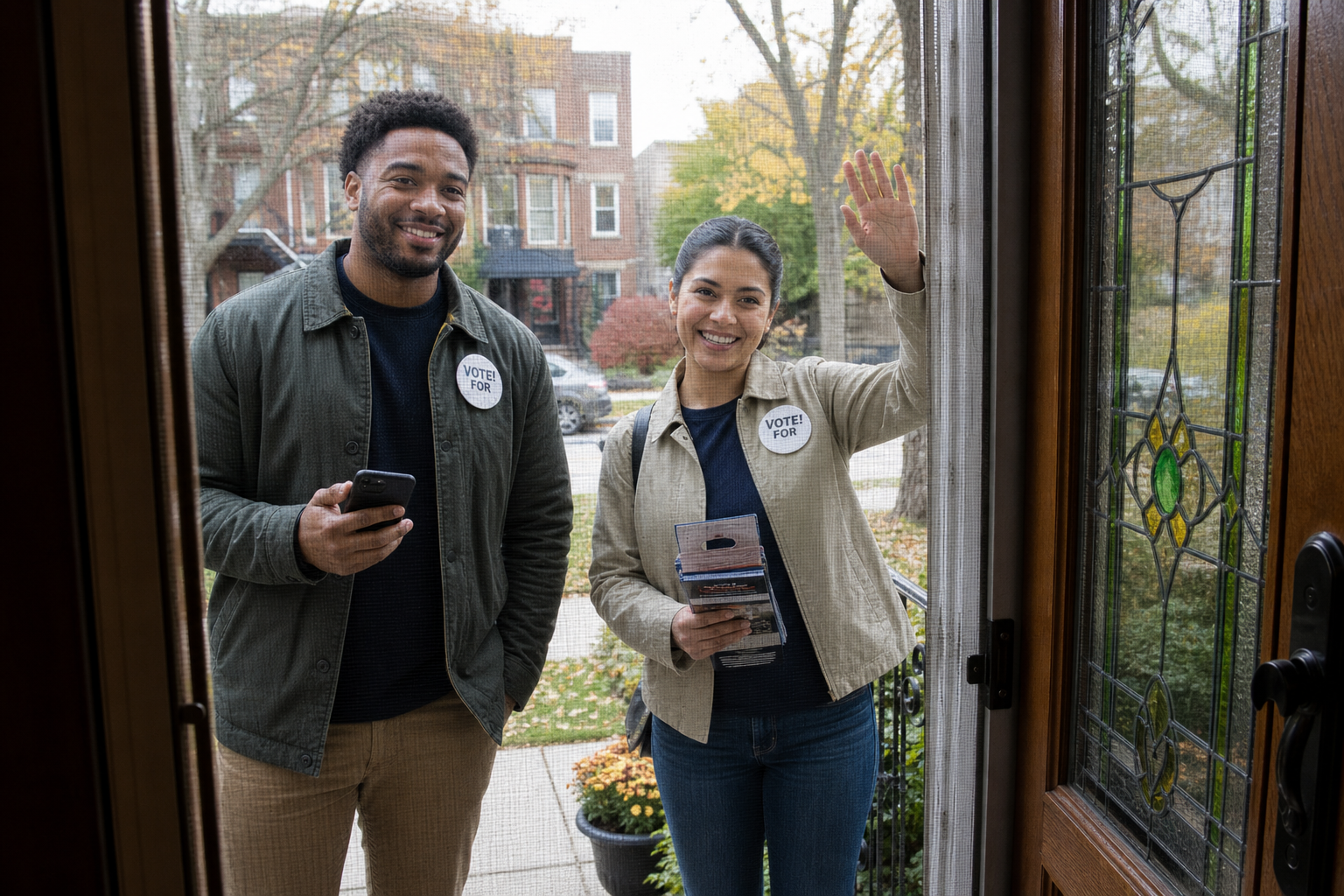
Canvassing is strongest when the campaign needs human context, local observation, or a conversation that may take more than one sentence.
It can be a good fit for
- listening to residents in a defined neighborhood;
- introducing a candidate or local issue;
- understanding how a policy affects people in practice;
- recruiting volunteers through a personal invitation;
- following up with someone who requested a conversation; and
- learning what is happening on a block, building, or community corridor.
The strengths are depth, local context, and the ability to notice what a list cannot show. The costs are time, route preparation, volunteer training, weather, safety, and the difficulty of reaching people who are not home.
A doorstep attempt is not a conversation. A conversation is not persuasion. A stated preference is not a vote. The field record should preserve those distinctions.
Phone calls
Phone calls are useful when the campaign needs a live exchange but cannot send volunteers to every address.
They can fit
- volunteer recruitment;
- supporter follow-up;
- issue listening at a wider geographic scale;
- event confirmation;
- questions that require back-and-forth; and
- reaching people during a narrow time window.
Calls can cover more territory than canvassing, but they depend on answer rates, caller preparation, time of day, and the quality of the phone data. A live call can still feel intrusive if the reason for contact is unclear or the caller is not prepared to respect a quick “no.”
Phone programs also create a follow-up burden. If people ask questions, request information, or want a later call, the campaign needs a reliable way to assign and close those requests.
Text messages
Texting is strongest when the message is short, timely, and easy to act on.
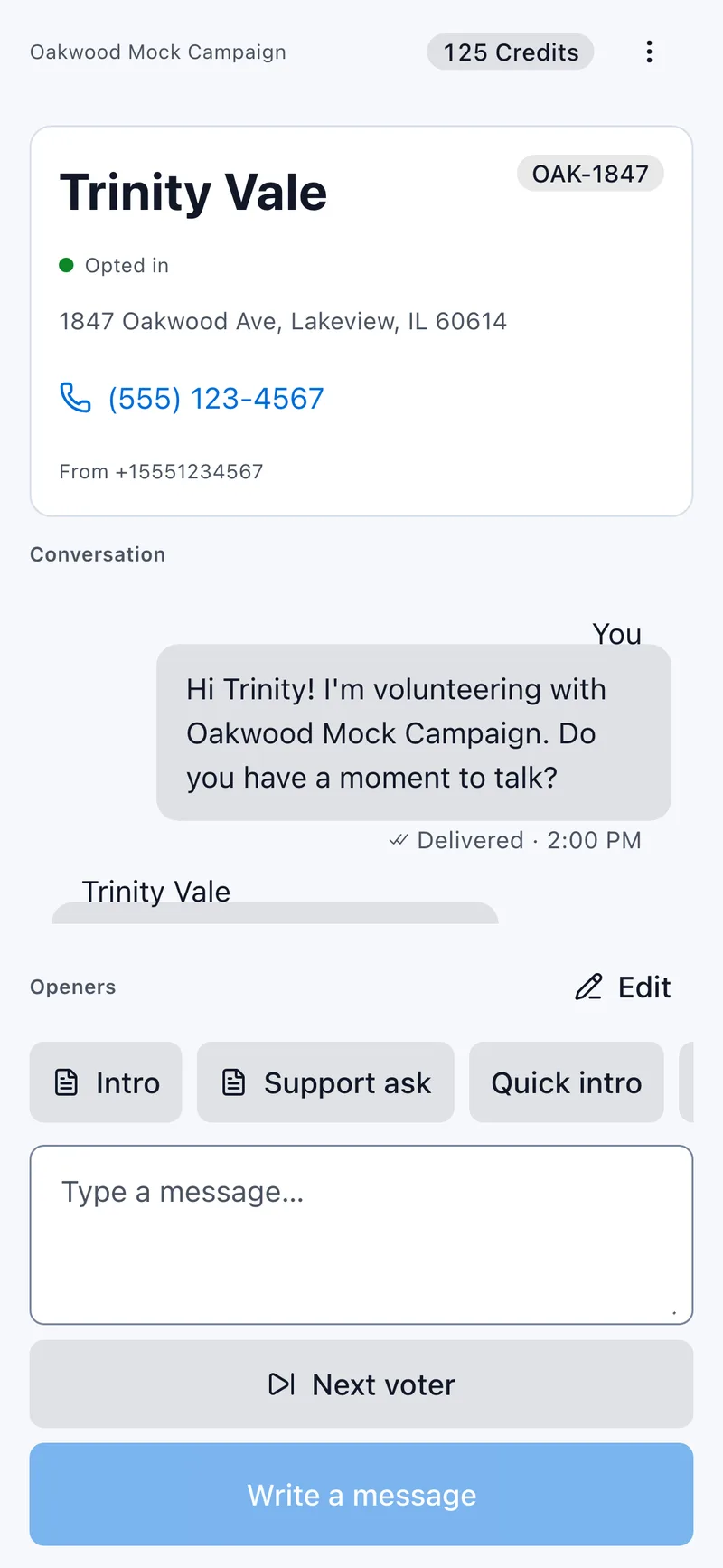
It can fit
- a reminder about an event or shift;
- a confirmation or logistical update;
- a link to information someone requested;
- a narrowly defined follow-up; and
- a simple invitation with one clear next step.
Text is not automatically the best tool for complex persuasion or open-ended listening. A short message can invite a response, but it cannot substitute for a thoughtful conversation when the campaign needs context.
Campaigns also need to follow applicable consent, carrier, and messaging rules. Those requirements vary by jurisdiction, sender, recipient, message type, and technology. Treat compliance as part of channel selection, not as cleanup after a send.
A practical decision matrix
Use this as a starting point, then adjust it to the campaign’s actual capacity.
| Learn what residents are experiencing | Canvass or call | Both allow clarification and listening |
| Introduce a candidate locally | Canvass | The setting provides context and human recognition |
| Recruit volunteers | Call or canvass | The campaign can answer questions and assess interest |
| Confirm event logistics | Text | Short, timely, and easy to act on |
| Follow up on a specific request | Call or text | Match the method to the person’s stated preference |
| Reach a defined supporter universe quickly | Text or call | Faster coverage than door-to-door contact |
| Understand a neighborhood pattern | Canvass | Volunteers can record context alongside structured results |
| Deliver a complex answer | Call or scheduled conversation | More room for questions and correction |
The table is not a universal ranking. It is a prompt to ask what the campaign needs from the interaction.
Match the method to the information you have
A campaign should not choose a high-touch method simply because it sounds more personal. It should also ask whether the underlying information is reliable enough to support the action.
Before contacting people, check
-
- Is the source authorized for this use?
-
- Is the record current enough for the purpose?
-
- Is the phone number or address usable?
-
- Does the campaign know what it is allowed to record?
-
- Can the team suppress people who should not be contacted?
-
- Is there a clear owner for replies and follow-up?
-
- Can the campaign explain why the person is being contacted?
Poor data creates waste in every channel. It sends volunteers to the wrong doors, produces calls that cannot connect, and makes texts feel disconnected from the person receiving them.
Use a sequence when one contact is not enough
The strongest programs often use a sequence rather than treating the channels as competitors.
One example
- Canvass a defined neighborhood to listen and introduce the campaign.
- Record only the structured outcome and the follow-up the resident actually requested.
- Send a text only when the person has a legitimate reason to receive one and the campaign has a clear, useful message.
- Make a call when the issue requires conversation or the person asked for one.
- Review what happened before expanding the program.
Another sequence might begin with a text invitation, continue with a call for people who respond, and reserve canvassing for a smaller group of high-value conversations. The correct sequence depends on the goal, permissions, capacity, and evidence—not on a belief that one channel is always superior.
The follow-up test
A simple test can prevent a great deal of wasted outreach
If someone responds positively, negatively, or with a question, can the campaign take the next responsible step?
If the answer is no, reduce the scope of the program before increasing volume.
For each contact method, define
- what counts as a completed contact;
- what counts as a follow-up request;
- who owns the follow-up;
- how quickly the campaign will respond;
- what information may be recorded; and
- how the team will know the request was closed.
A campaign that measures only attempts can create an impressive activity report while leaving real people waiting for answers.
Three early-campaign scenarios
A first neighborhood listening shift
A small campaign wants to understand concerns in one area before finalizing its field message. Canvassing is likely the best starting point because it combines local presence with open-ended listening.
The campaign should keep the shift narrow, train volunteers on one honest question, and record patterns without treating a selected group of conversations as a representative poll.
A last-minute event reminder
The campaign needs to remind confirmed supporters about a meeting tomorrow evening. A concise text may be appropriate if the campaign has the necessary permission and a clear logistical purpose. The message should include one action, not a paragraph of campaign history.
A volunteer recruitment push
The campaign needs people for Saturday but does not know who is interested. A call may be better than a mass text when the campaign expects questions about time, safety, transportation, or the work itself. A text can support the call with a simple confirmation link, provided the contact path is appropriate.
Where a field platform helps
The hard part is not merely sending a message or assigning a route. It is preserving enough structure for the campaign to learn what happened and act on it responsibly.
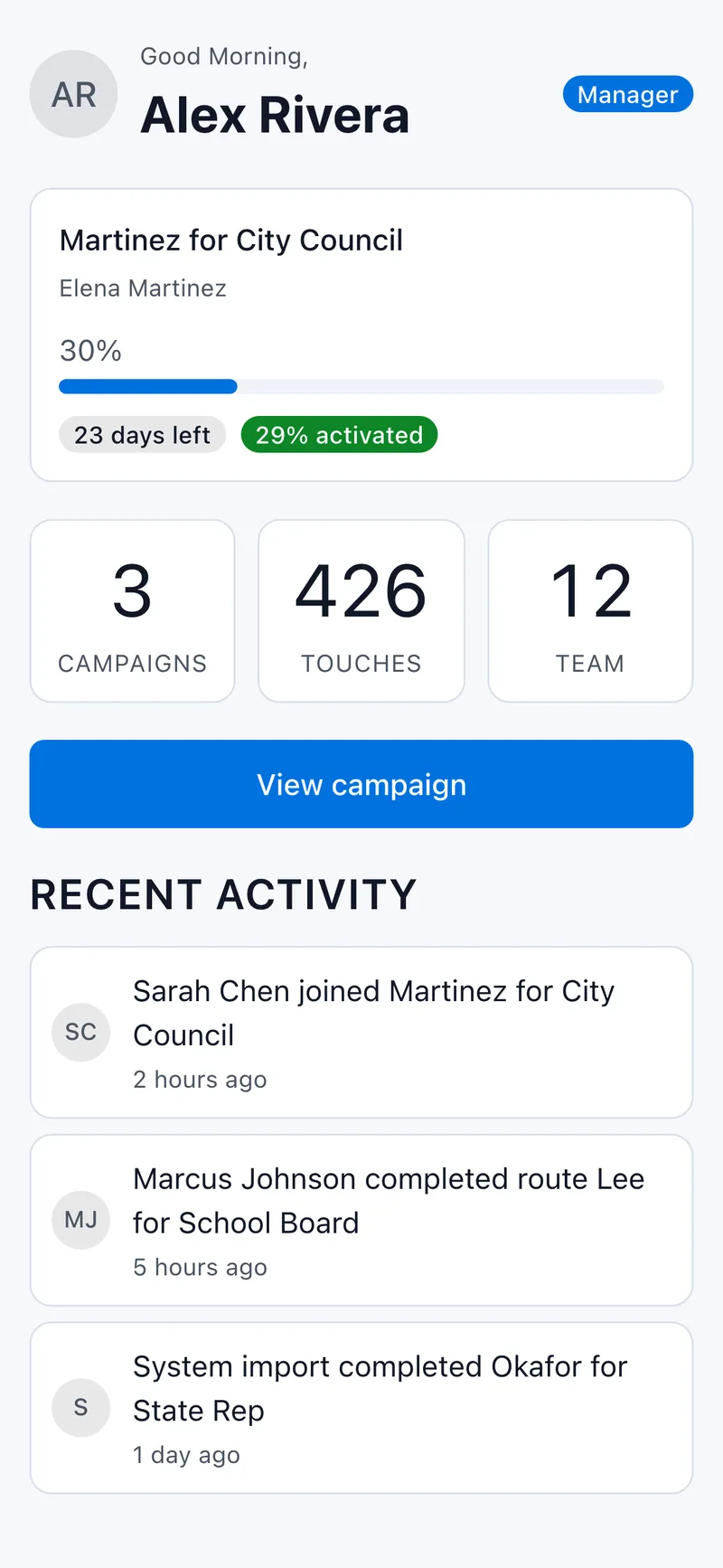
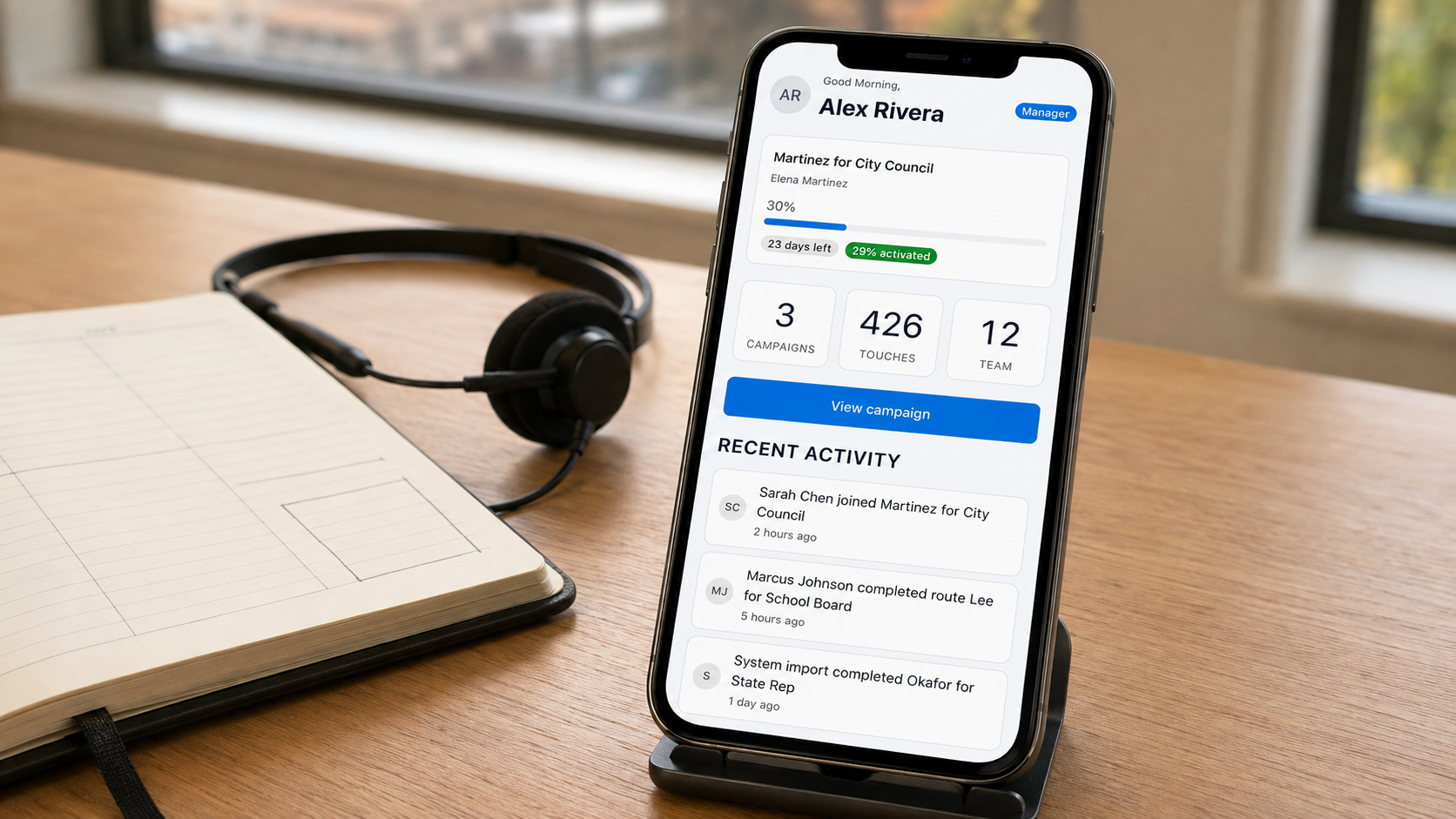
A field platform such as Activate can be useful when a campaign needs to:
- give volunteers a shared set of talking points;
- assign and update field work;
- distinguish attempts, contacts, conversations, and follow-ups;
- keep the next action visible to the person responsible; and
- review patterns while the field operation is still active.
The platform should support the campaign’s judgment, not replace it. It cannot decide whether a doorstep, call, or text is appropriate without the campaign understanding its goal, audience, permissions, and capacity.
A channel-choice checklist
Before launching a contact program, answer these questions
-
- What is the one job this contact is meant to do?
-
- Why is this channel a better fit than the alternatives?
-
- What does the campaign know about the people it plans to contact?
-
- What consent, suppression, or compliance requirements apply?
-
- What will volunteers or staff say if someone asks a difficult question?
-
- What outcomes will be recorded?
-
- Who owns each follow-up?
-
- What will the campaign change if the response is different from its expectation?
-
- What evidence will justify expanding, narrowing, or changing the program?
If the team cannot answer these questions, the next step is probably preparation—not more volume.
The best contact method is the one that matches the campaign’s purpose, respects the person being contacted, and leaves the team better able to make the next decision. When that follow-up is coordinated in Activate, the software preserves the record while the campaign retains the judgment.
Ready to start canvassing?
Set up your campaign and start canvassing in minutes. No credit card required. Activate. Toward Victory!
Start Free Campaign