Nomination Papers for a 2027 Race: Plan the Signatures
A signature plan for spring 2027 local candidates: find your office's rule, size the target with a buffer, turn it into shifts, and schedule the canvass around the holidays and short days.
A spring local race starts with a piece of paper. Before a candidate for city council, school board, county board or village office appears on the ballot, their nomination papers have to reach the filing officer with enough valid signatures, on time. In some states that window falls in the shortest, coldest and busiest weeks of the year.
This guide turns your office's signature requirement into a number of volunteer shifts, then fits those shifts into the calendar you actually have.
The 2027 calendar has already started
Wisconsin's window is the one most candidates are planning for right now. Nomination papers for the April 6, 2027 spring election may be circulated from Tuesday, Dec 1, 2026, and they are due with your filing officer by 5 p.m. on Tuesday, Jan 5, 2027. That is 5 weeks, with 2 holidays inside them.
Illinois runs earlier. The filing period for April 6, 2027 consolidated elections closed on Nov 23, so Illinois candidates who filed are now in the objection period and turning to their first canvass. Other states with spring races set their own windows, and your state election office or county clerk publishes them. Read your state's calendar before you plan anything below, because every number in the plan counts backward from the filing deadline.
Find the rule for your office before you print a sheet
Three facts decide your plan, and the official sources state all of them:
- How many signatures. Many offices set a range, with a minimum you must reach and a maximum you may not exceed. In Wisconsin, the Elections Commission publishes a ballot access checklist for each kind of local office with its range and forms.
- Who may sign. Signers usually must be eligible voters who live in the district the office serves. A signature from one street outside the boundary does not count.
- What makes a line valid. The form, the signer's address, the date, and the circulator's certification. Each state sets its own rules, and a sheet with a defect on the circulator's certificate can lose every line on it.
Write these 3 facts at the top of your plan, with the link to the source next to each.
Turn the requirement into a number of shifts
The arithmetic has 4 steps. Every number below is a worked example; replace each one with your own rule and your own pace.
| 1. Required signatures for your office | 100 |
| 2. Add a buffer for lines that fail review | × 1.4 = 140 |
| 3. Divide by valid signatures per volunteer-hour | ÷ 7 = 20 volunteer-hours |
| 4. Divide by hours per shift | ÷ 2 = 10 volunteer-shifts |
Two of those numbers need care.
The buffer. Some lines fail review: a signer outside the district, a missing date, an address the clerk cannot match. Your filing officer or an experienced circulator can tell you how much margin local candidates usually carry. Check the target against your office's maximum, because a range with a ceiling limits how large the buffer can be.
Signatures per volunteer-hour. Your first shift tells you this. Count valid lines on the returned sheets and divide by the hours your volunteers spent on doors. Door-to-door in a dense neighborhood on a Saturday afternoon will produce a different rate from a weekday evening in a spread-out subdivision, so measure your own before you plan the last 3 weeks.
In the example, 10 volunteer-shifts is 5 Saturdays with 2 volunteers, or 2 Saturdays with 5. Stated that way, the requirement becomes a recruiting target you can act on.
Five weeks across the holidays: a sample Wisconsin calendar
Daylight shrinks the window further. In mid-December the sun sets around 4:20 p.m. in Milwaukee, according to the U.S. Naval Observatory, so a weekday evening shift has little light left. Plan most door shifts for weekends, late morning to mid-afternoon.
| Nov 23 to 30 | Read your office's checklist, get the forms, recruit for the first 2 weekends, request your voter list |
| Dec 1 to 6 | First day of circulation. A small first shift to measure your signing rate |
| Dec 7 to 20 | The bulk of the shifts, 2 weekends at full strength. Count valid lines every night |
| Dec 21 to Jan 3 | Holiday weeks: short shifts around family plans, and any signatures still missing |
| Jan 4 to 5 | Review every sheet, assemble, file well before 5 p.m. on Jan 5 |
Aim to reach your target by Dec 20. The holiday weeks are your margin, and a plan that needs them at full strength has no margin left.
Walk the doors most likely to sign
Signatures come fastest from doors inside the district where an eligible voter lives. A voter list for your district gives you exactly those doors. The state's request path is on Activate's Wisconsin voter data page.
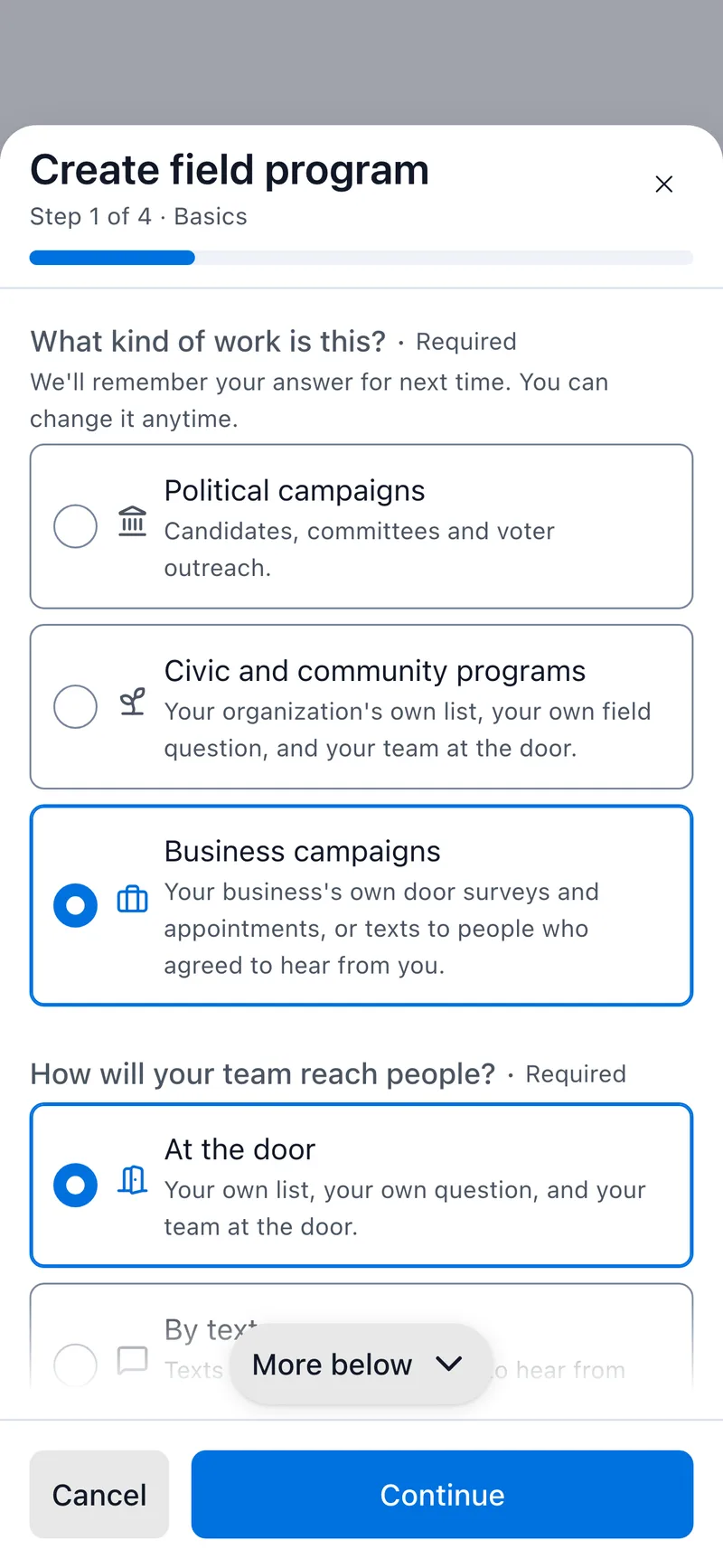
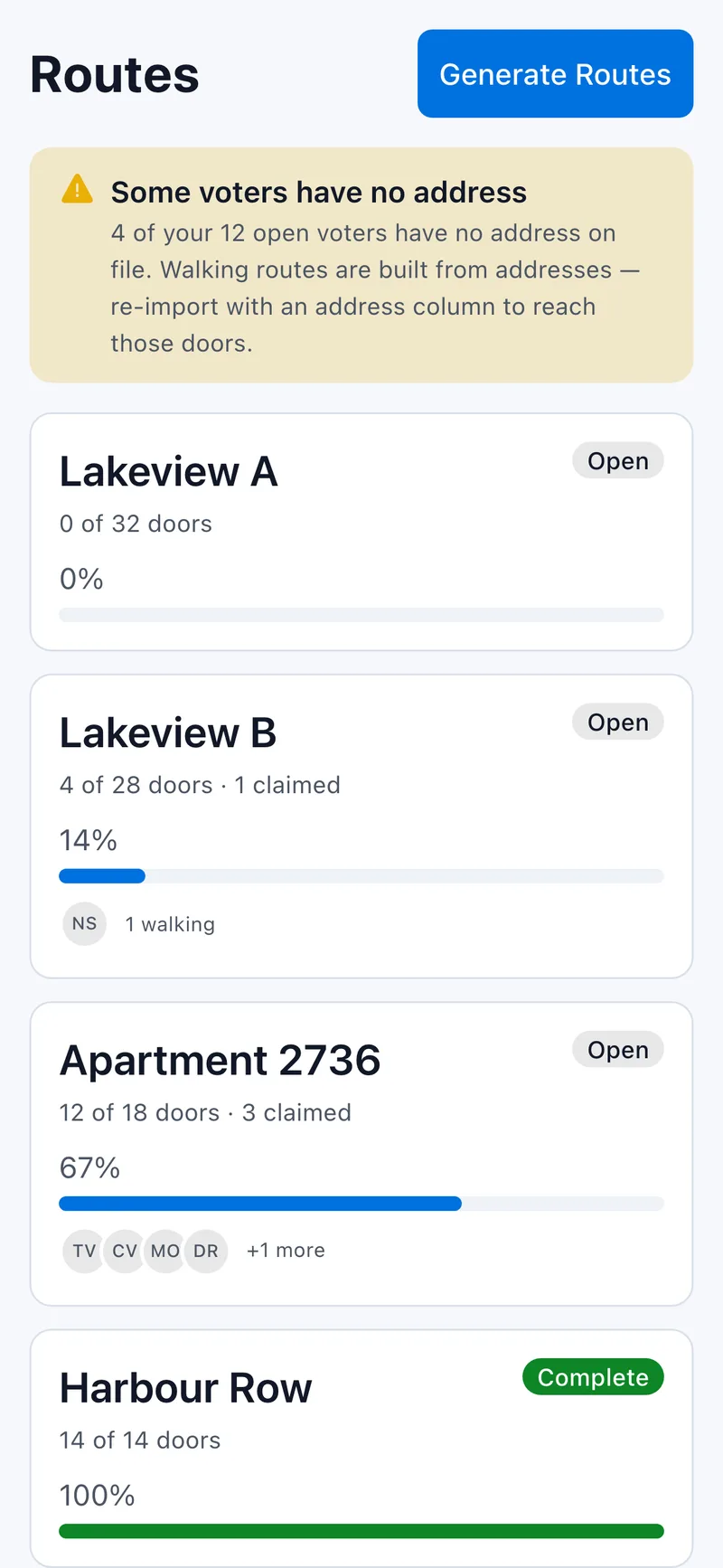
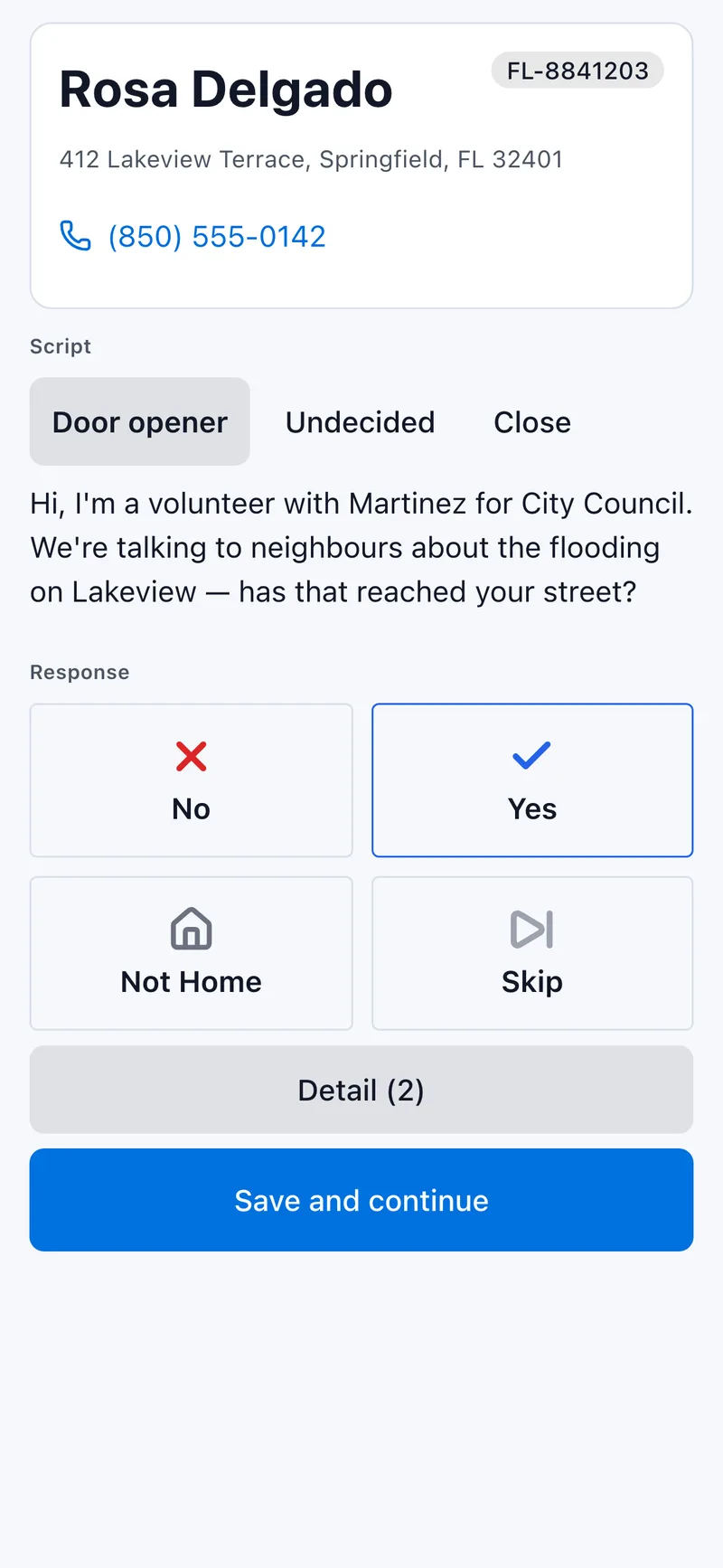
In Activate, give the canvass one field question, such as "Would you sign my nomination papers today?", and each visit records Yes, No, Not Home or Skip, plus notes. Activate groups nearby stops and splits them across your team automatically, and the remaining doors carry into the next weekend's routes.
Keep the field record and the paper apart. The signed sheet is the legal document, and a Yes in the app is a planning signal that someone agreed to sign. Every evening, compare the Yes count with the valid lines on the returned sheets. The petition drive guide explains that nightly reconciliation in detail, and it applies to nomination papers line for line.
Brief circulators on the sheet, not just the door
A circulator who knocks well and fills a sheet badly costs you signatures. Before each first shift, cover 4 rules in 10 minutes:
- One sheet, one jurisdiction. Every signer on a sheet must live in the district on its header.
- The signer writes their own line. Name, address and date as the form asks, with nothing filled in by the circulator.
- The circulator completes the certification exactly as the form requires, and only for sheets they personally circulated.
- Every sheet comes back the same day. No sheets in glove compartments over the holidays.
The First 30 Minutes guide covers the rest of the shift briefing.
File with time to spare
On Jan 4, lay out every sheet and check it against the checklist from the filing officer: certification complete, pages in order, count above the minimum and below any maximum. Then file on Jan 5 as early in the day as you can, because a problem found at 4:30 p.m. cannot be fixed.
Once you are on the ballot, the same volunteers, the same list and the same habit of counting every night become your field program for the spring. If you are planning the signature canvass now, set up your campaign before Dec 1 so the first shift starts with routes ready.
Ready to put your team on the doors?
Upload your voter list or start without one. Your first 5,000 records are free.
Start Free Campaign