Canvass Shift 101: What to Bring
The supplies, budget and ground rules that make a door-to-door shift go well, from hot coffee and hand warmers to no headphones and a goal of 20 good conversations.
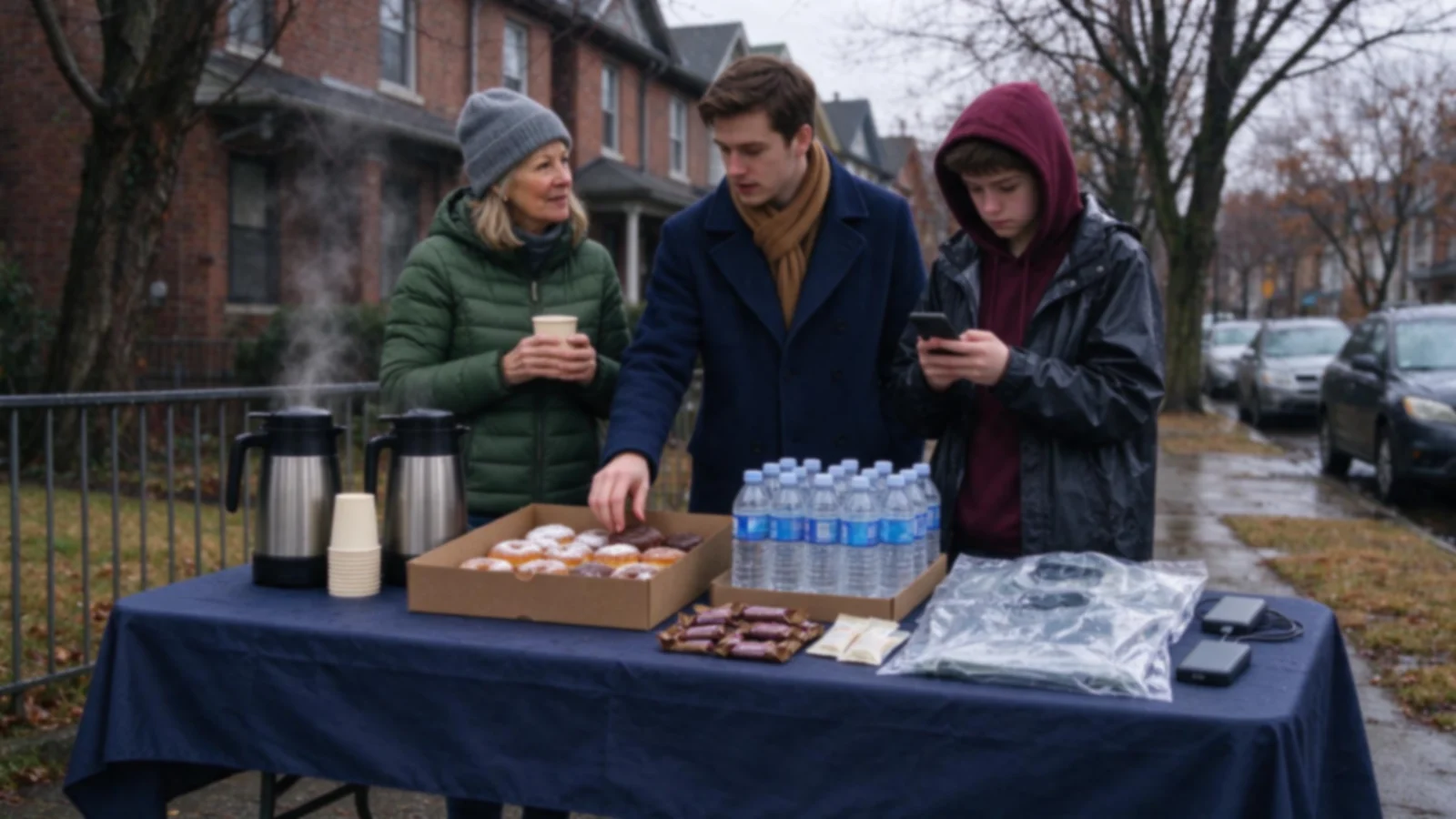
A canvass shift starts when people show up, well before anyone knocks on a door. What happens in those first 15 minutes decides whether the afternoon becomes good organizing or a group of volunteers standing around wondering what they are supposed to do.
So this guide is about supplies. Voter files, turf and targeting all matter, and they are covered elsewhere. This is coffee, donuts, water bottles, and whether somebody remembered the hand warmers, because the little things decide who comes back next Saturday.
Check the weather the night before, and again in the morning
In a Midwestern city you can see 3 seasons before lunch, so check twice and buy for the forecast you actually get.
- Cold. Have hot coffee ready when people arrive: fresh, not yesterday's pot. Bring a box of disposable hand warmers. Anyone who has knocked doors in February knows they are worth every cent.
- Rain. Ponchos, sized to the forecast. A 10% chance of rain does not call for 100 ponchos. Rain all afternoon does call for one per volunteer.
- Heat. Water, and lots of it. Hand people a bottle when they arrive and tell them to take 2 when they leave. Add sunscreen, with a little extra for whoever forgot theirs.
- Unsafe. Lightning, dangerous ice or genuinely unsafe weather means you reschedule. No shift is worth somebody getting hurt.
A comfortable volunteer is a better volunteer. A volunteer who is freezing, dehydrated or miserable is probably not coming back next week.
Feed your volunteers
You do not need to cater a banquet. You are running a canvass shift, not a wedding reception. But a box of donuts, a carafe of coffee and a pile of Snickers bars tell people their time is appreciated before you say a word.
Snickers bars earn their place on the list. They are individually wrapped, they fit in a jacket pocket, and they give somebody a lift halfway through a long afternoon. Bring a few alternatives for people with allergies or dietary restrictions too.
If you bring only 2 things, bring water bottles and Snickers bars. People remember how you treated them, and you want them to connect volunteering with something they enjoyed.
A shift for 10 volunteers runs about $60
Most door programs have small budgets, whether it is a school-board race, a park district campaign or a neighborhood group. Here is a sample budget for a Saturday shift with 10 volunteers. Prices vary by city, so treat the numbers as a worked example:
| Coffee | $15 |
| Donuts | $15 |
| Water bottles | $8 |
| Snickers and other snacks | $12 |
| Hand warmers or ponchos, if needed | $10 |
| Total | $60 |
That is $6 per volunteer, and you can often do it for less. Reusable supplies last for weeks, and volunteers can bring refillable bottles. Spend enough to make people comfortable, and keep the rest for the work itself.
One more item costs nothing: the bathroom. Tell people where they can use one before they leave. It sounds silly until you have spent 3 hours knocking doors.
Phones replaced the clipboards
Shifts used to run on stacks of printed walk sheets, clipboards and pens that stopped working in the cold, followed by somebody spending Sunday afternoon working out what happened on Saturday. With Activate, you invite your team with a QR code instead.
The manager opens the campaign and shows the team's QR code, and everybody scans it. Canvassers join in seconds, no app store, and land on their assignments with the script on screen. Each answer is recorded at the door, so there is no data-entry session on Sunday, no lost clipboard and no decoding somebody's handwriting.
That moves one item onto the supply list: a phone that lasts the shift. Ask everyone to arrive charged, and bring 2 or 3 power banks for whoever did not.
Give the ground rules before anybody leaves
Keep the briefing short and cover these every time
- No headphones. Music and podcasts are great on the walk home. On turf, volunteers cross streets, approach unfamiliar properties and talk to strangers, and they need to hear what is happening around them.
- Sunglasses off at the door, where you can. Bright afternoons can be brutal, and nobody should squint for 3 hours. When someone opens the door, eye contact matters. People want to talk to a person, not a pair of mirrored lenses.
- Smile. Smile when the door opens, when you introduce yourself, and when somebody tells you they disagree. You are there to have conversations, not to win arguments with the neighborhood. The same goes for the phone: people can hear a smile, and your voice sounds warmer with one.
- Respect the property and the answer. Honor No Trespassing signs, stay off private paths where you are not welcome, and know when to say "Thank you for your time" and move on.
- Know the boundaries. Everyone should know the edges of their turf, when the shift ends and whom to call if something goes wrong. Never send anyone somewhere they feel unsafe.
Decide on pairs before the team heads out
Some people love canvassing alone. Others are new and will be far more comfortable walking with somebody experienced. Pairing them up is a good way to train.
Decide who in each pair does the talking, who observes, and who records the answer. Activate splits nearby stops across the team so nobody knocks the same door twice, and a pair should agree before the first door which phone records the conversation, so it is logged once.
Keep the team connected once the shift starts
A manager used to spend the afternoon waiting for volunteers to come back before learning how it went. Now you can watch the shift on a live dashboard that updates automatically as your team works, and course-correct while the shift is still on.
Use the campaign's group messages to keep people together. About halfway through, send some encouragement, for example: "Great work, everybody! Keep those conversations going!" Recognize a volunteer who is doing well, and the one who just finished a first door. Celebrate a meaningful conversation and the person who helped a new volunteer find their feet, as well as the one who knocked the most doors.
As the shift winds down, send the wrap-up: "We're finishing in 20 minutes. Finish your current block and head back!" Nobody is left wondering whether the shift is still on.
The packing list
Things people tend to forget
- Power banks and charging cables
- Sunscreen for summer shifts
- A small first-aid kit
- Extra water
- Ponchos or hand warmers, depending on the forecast
- Printed material for residents who want something to read
- The shift manager's phone number, written down for every volunteer
- One more Snickers bar
Buttons or stickers are a nice touch, and volunteers love them. Just keep it simple. A canvass shift should not need the logistics of a military deployment.
Bring everybody in, then send them out
Gather the team for the kickoff, and keep it short. Please, not a 45-minute speech. Cover why the work matters, what today is meant to accomplish, the script, the turf and how to record an answer. The First 30 Minutes guide covers that setup step by step.
Then give the team a goal: 20 good conversations this shift. The goal counts conversations, rather than doors knocked or flyers left behind. It is ambitious for some shifts and easy for others, so adjust it to the neighborhood, the volunteers and the time you have, and keep the goal about conversations. One Honest Question is a good way to make each one count.
End the kickoff with a quick thank-you, a round of applause for the people who came early and whoever brought the donuts, and then clap it off. Everybody heads out with coffee finished, Snickers in pockets and phones connected. When they come back, the end-of-shift debrief turns what they saw into a better plan for next week.
Supplies are how a team knows it matters
None of this is complicated, and all of it shows. Coffee on a cold morning, water on a hot one, a clear briefing and a message at the halfway mark are how volunteers learn that their Saturday was worth something. If you are planning your first shift, set up your team in Activate before the weekend, then spend the time you saved on the donut run.
¿Listo para comenzar la campaña?
Prepara tu campaña y empieza a tocar puertas en minutos. No se requiere tarjeta de crédito. Activate. ¡Hacia la victoria!
Iniciar Campaña Gratis